

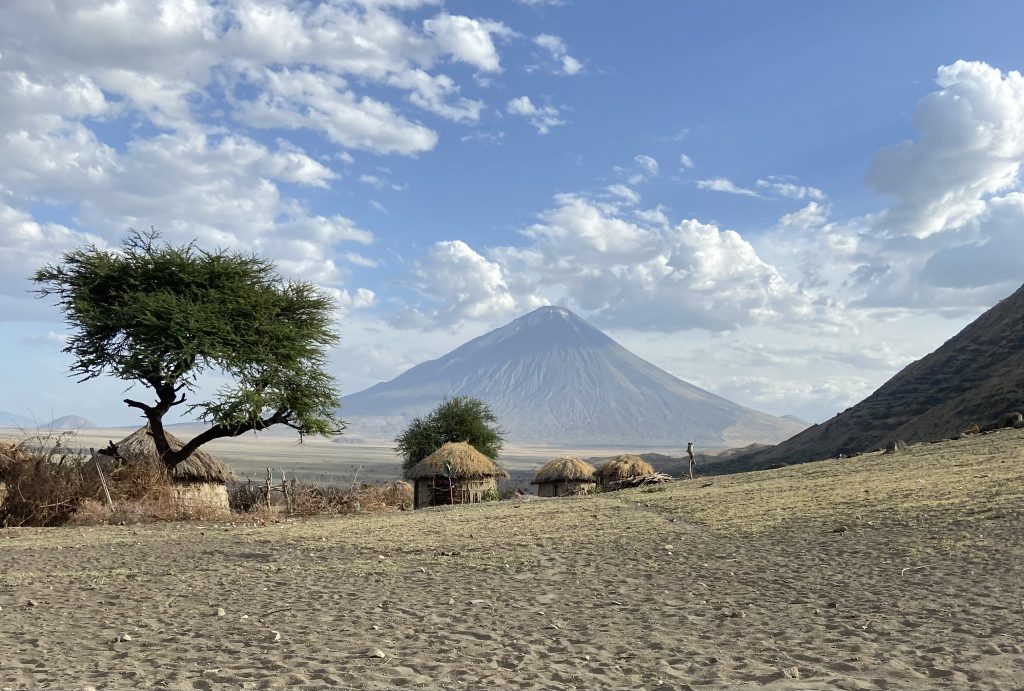
Within the hot, sandy, tornado-swept plains of the Gregory rift stands one of Tanzania’s hidden gems: Ol Doniyo Lengai (ol Don-e-yo Len-Ga-iy).
This monolith of rock and volcanic ash is not only significant to the local Maasai tribe, but one of the most important ecological sites in the entire country.
We thought we’d spend a little bit of time exploring this still active volcano.
It’s Name & Religious significance.
The name ‘Ol Doniyo Lengai’ comes from the Maa language of the Maasai, and roughly translates to ‘Mountain of God’.
There are several myths swirling around its towering peak, but, the most compelling tells the story of how the mountain became the hiding place of the Maasai god, Engai. After being hit with a hunter’s arrow, the deity fled into the rock, where it now assiduously guards the surrounding lands, and demands gifts in return for good fortunes.
On occasion, the local tribespeople offer gifts to overcome drought, disease or to win favour during interclan disputes. A group will travel to the peak, offer a sacrifice, dance and sing.
Would it be outlandish to say, as a visitor, Engai will whisper to you?
The mountains is known to ‘speak’ to passers by. If you are close enough, you can hear the bubbling, hissing and moving of the volcanic activity – the sounds of demonic whispers in the wind.
Geography
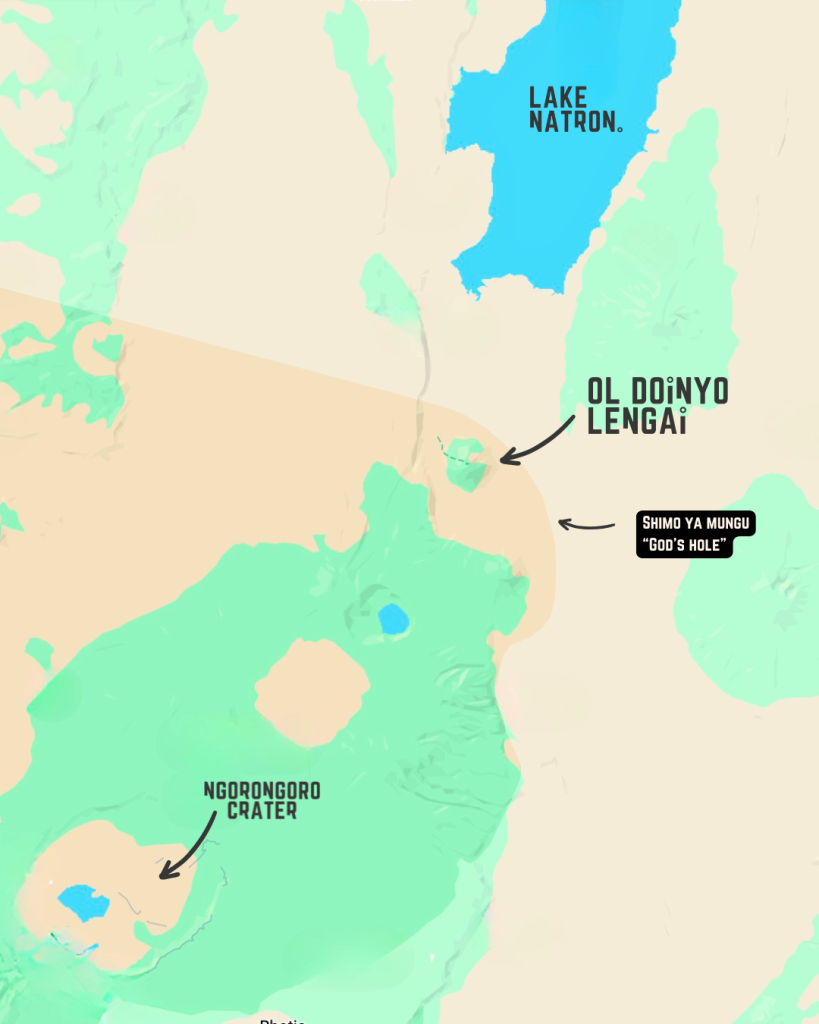
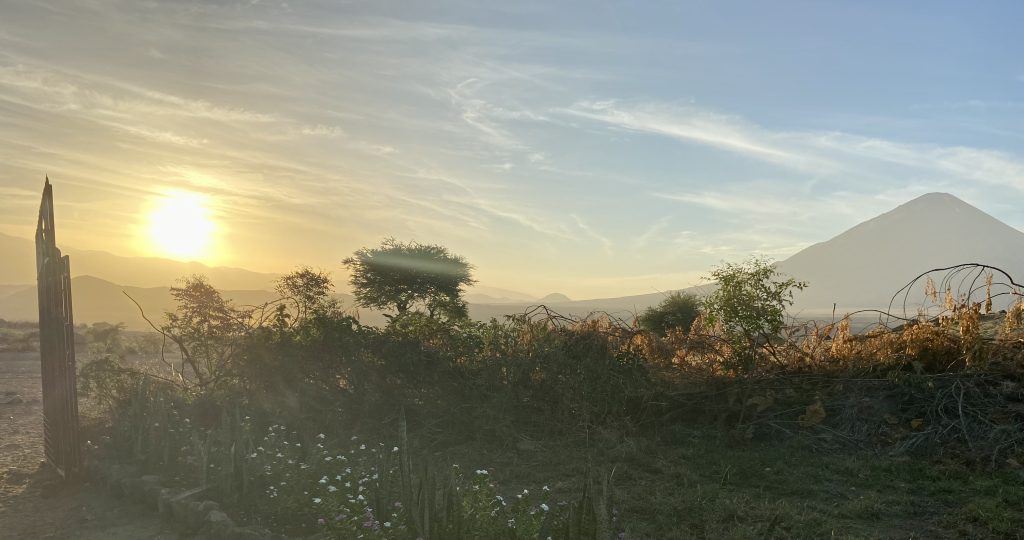
The volcano is situated at the end of the Rift Valley, 16kms south of Lake Natron. The mountain stands alone within a great valley, and is an imposing giant that can be seen from the shores of Lake Natron.
The peak stands at approximately 2962m high, but, due to the constant volcanic activity, has been recorded to be shrinking.
Volcanic activity in this site has been recorded as far back as 1880; however, the site has seen regular expeditions since 1904. The volcano is almost constantly erupting, and “transient uplift episodes” (a pulsing of the Earth’s crust) have been monitored in 2023 and 2024.
The mountains produce a steady flow of incredibly unusual lava, which could be the foundational block that supports the magnificent biodiversity of life in Northern Tanzania (and what has turned Lake Natron into a “blood red” soda lake)
Geology & Lava Composition.
Scientifically, Ol Doinyo Lengai is also very special. This is the only volcano in the world to vent lava composed of Carbon, rather than silica.
It’s a rare occurrence of Natrocarbonatites (melilite, nephelinite and phonolite – natrocarbonatite lava also contains sodium, potassium, nyerereite and gregoryite.
The result is a lava that flows more akin to water than lava; its fluidity helps the lava travel 1-5 metres per second, and bubbles up from the vents with a dark black or brown colour. It looks like gushing oil and only faintly glows in the darkness of night.
Due to its high carbon mineral contents, the lava erupts at relatively low temperatures -between 500 and 600 degrees C ( 930 – 1100 degrees F). Still, an extremely hot substance, but in 2007, it was reported that a Maasai guide fell into the lava and managed to climb back out – albeit with severe, life-changing injuries.
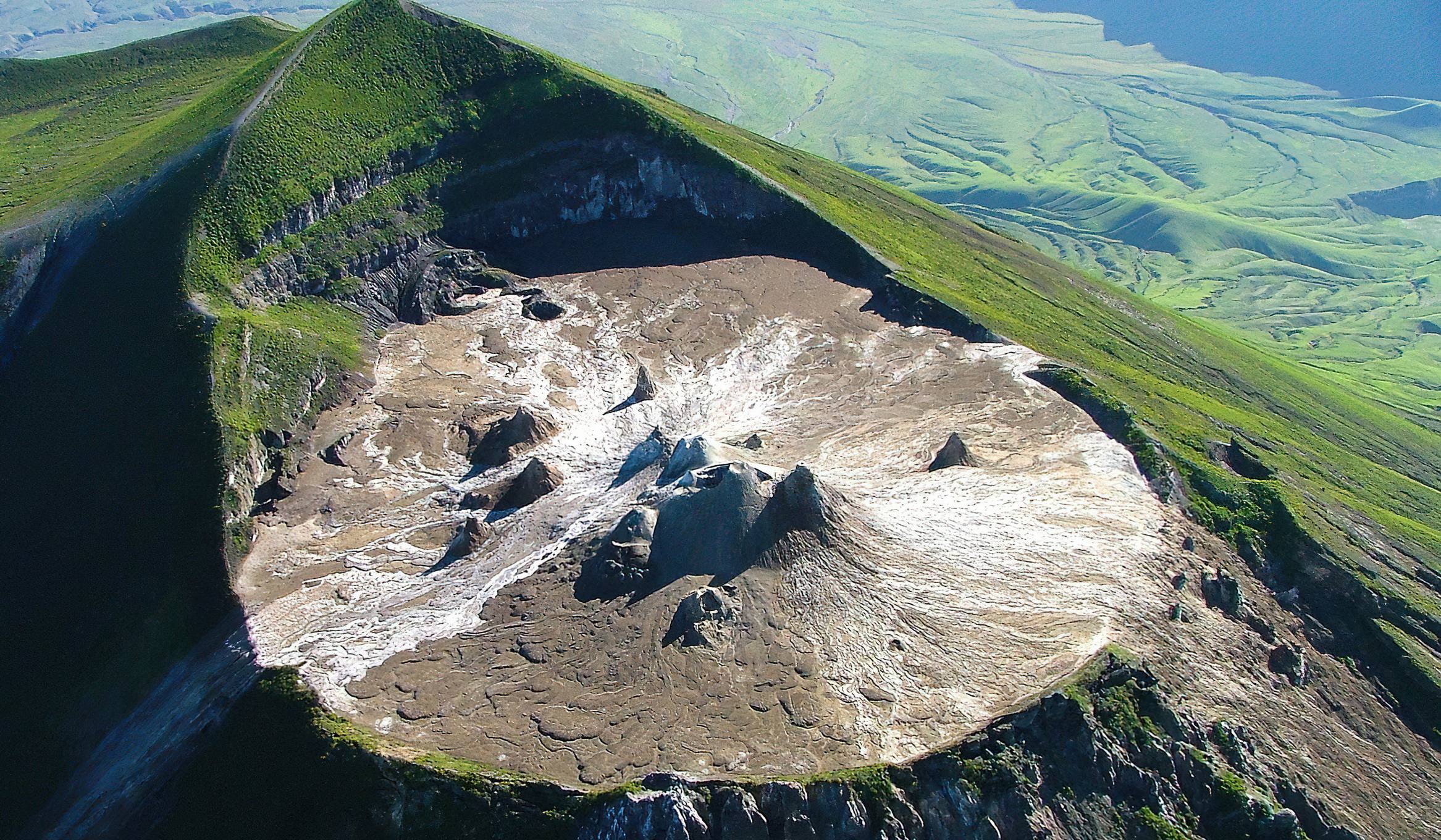
At the top of the mountain, it is clear to see the volcanic deposit seeping down the side of the mountain. The lava appears white, grey as it cools and breaks down very quickly. The volcanic dust is then blown from the top, across the surrounding lands, fueling the most fertile and fascinating landscapes on earth.
The protein-rich grasslands of the Serengeti that fuel the Great Wildebeest Migration are a product of the lava-dust blown from Ol Doinyo Lengai.
It does seem that there are two magma reservoirs underneath the volcano; one containing carbonatitic lava and the other a more common silicic (observed during an eruption in 1993).
Visiting & the Ol Doniyo Lengai Hike
The universe favours the brave.
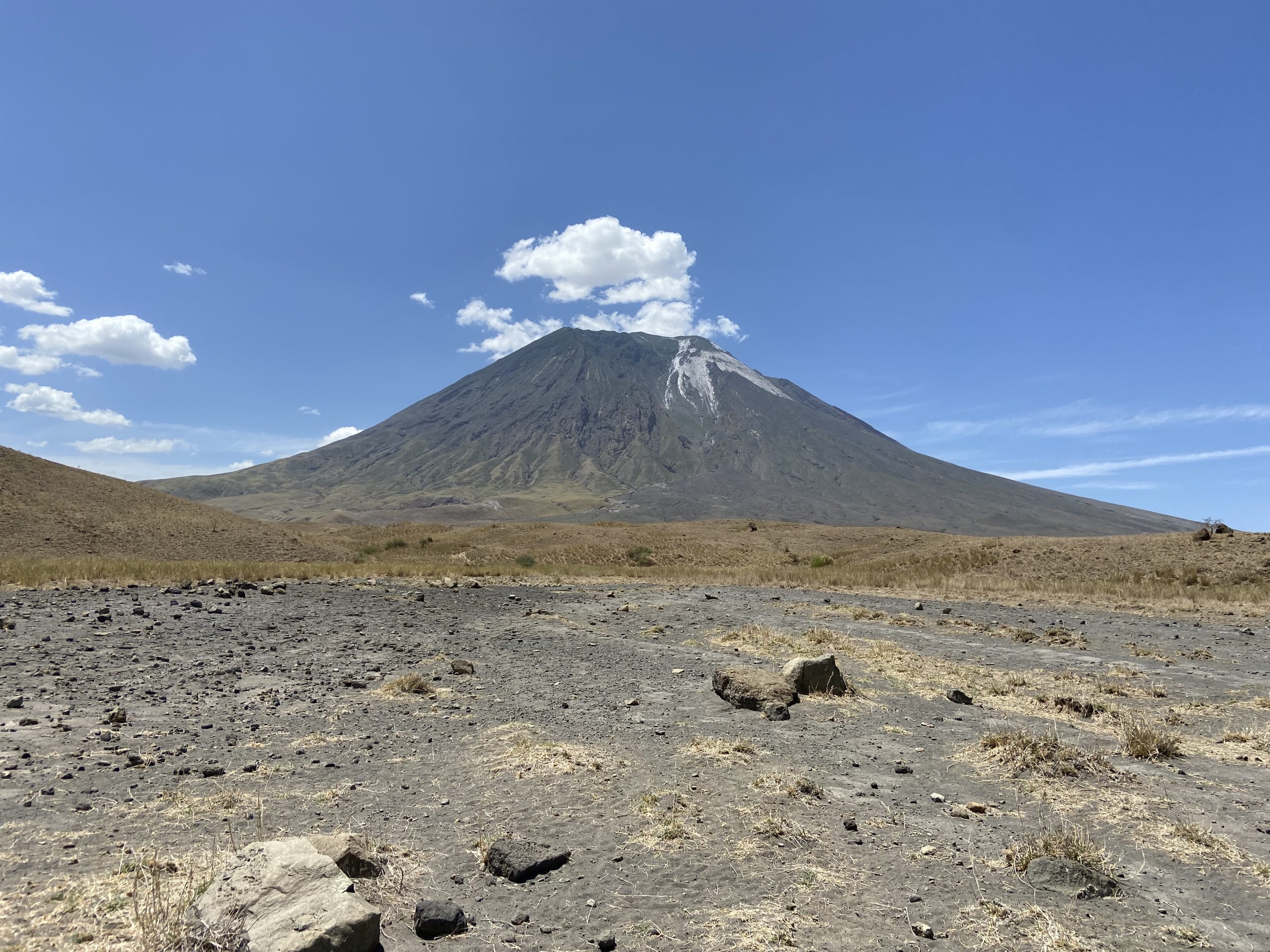
For the brave, it is possible to hike up the mountain and visit the Martian-esque crater at the top. While it is still an active volcano, experienced guides regularly lead tours and scientific expeditions to the mountain’s peak.
The Ol Doniyo Lengai hike is potentially one of the most impressive, once-in-a-lifetime, experiences that are available in Tanzania (there are many life-changing experiences here). Not only will you be able to say that you’ve stood on the top of an active volcano, but you will be able to survey the spectacular views of the Ngorongoro highlands, rift valley and finally across the stunning Lake Natron, and into Kenya’s Maasai Mara.
For the rest of us, you can stand at the foot of the mountain – and listen to it speak from the shores of Lake Natron, as part of our Safari tour packages.
 English