

As they are one of the most iconic indigenous tribes in Africa, you may already know a little bit about the Maasai. But, did you know that there are 120 other identified tribal communities in Tanzania?
While you may not get to meet all of them, you can meet two tribes with strong connections to Tanzania’s northern regions are the Hadzabe and Datoga tribes.
The Hadzabe are one of the last remaining hunter-gatherer tribes in East Africa and live much as their ancestors did thousands of years ago. Meanwhile, the Datoga are skilled pastoralists and blacksmiths
Our partners AC4D Africa have put together an online exhibition of both tribes. Photos taken by Tanzanian photographer, Ammal Aboud .
The Hadzabe: The Last Hunter Gathers.
Origins and History
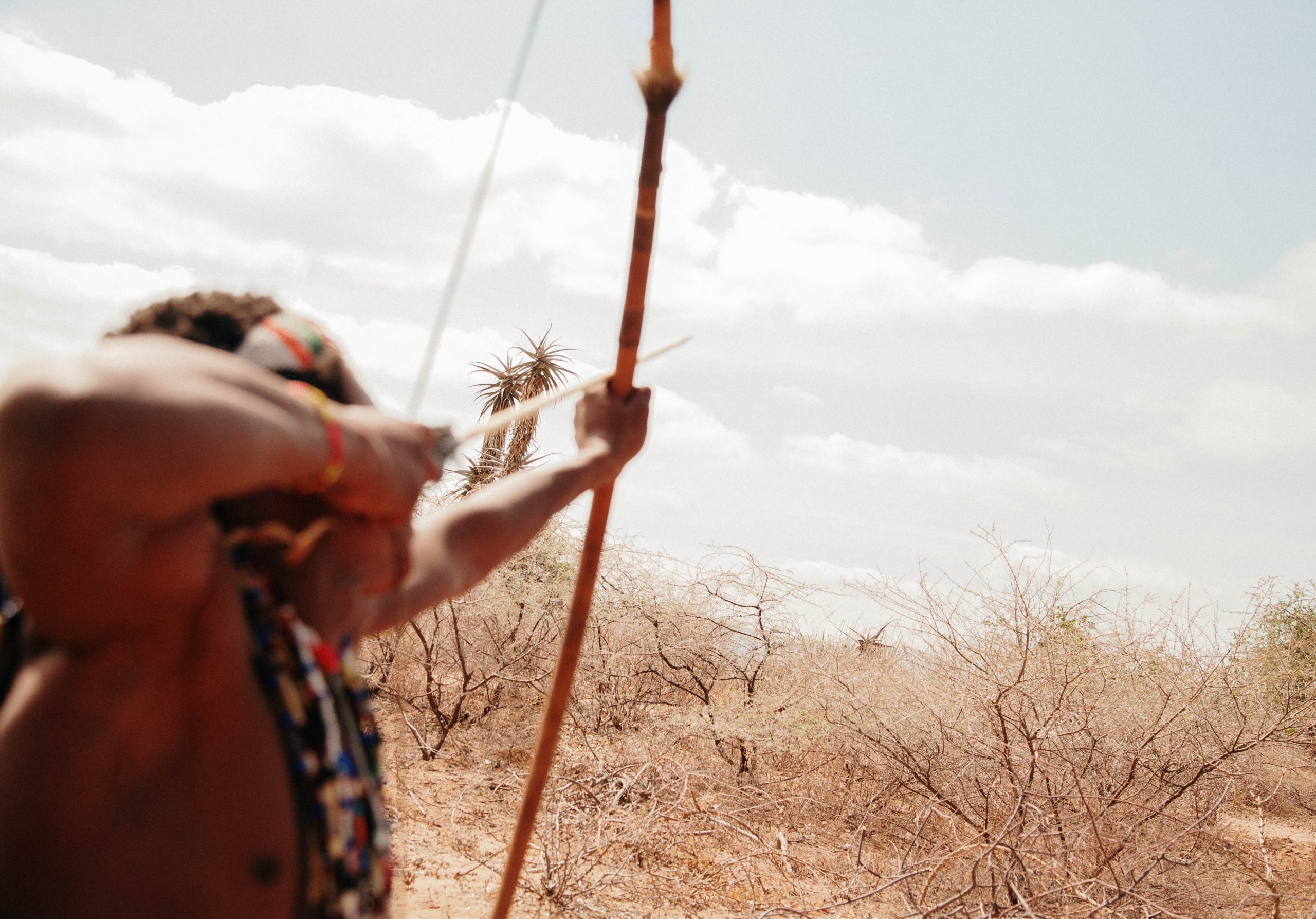
The Hadzabe (also Hadza) are one of the most ancient peoples in East Africa, and still hold on to many of their ancesteral traditions.
Genetic studies suggest they may be directly descended from some of the earliest human populations, making their way of life remarkably similar to that of humankind’s distant ancestors. Today, their homeland is situated close to Lake Eyasi, which rests south of the Olduvai Gorge, the cradle of mankind, within the Rift Valley. Their connection to the land and minimal reliance on external systems have helped preserve their traditions.
Unlike neighbouring agricultural or pastoral communities, the Hadzabe never adopted large-scale farming or livestock herding; instead, they have maintained their hunter-gatherer existence, like the generations that came before them.
Daily Life and Survival
The Hadzabe number only around 1,500 people, with perhaps 300 or 400 still living entirely as hunter-gatherers. Unlike many of us, their lives primarily revolve around the pursuit of food. Men hunt, using handmade bows tipped with poison arrows to bring down game, small birds or antelope. They are highly skilled trackers, able to read footprints and subtle signs in the bush to follow animals for miles.
When visiting the Hadzabe, you can learn from them by joining a traditional hunt. Want to learn more? Click here.
Women, on the other hand, are expert foragers. They dig for tubers, collect berries, gather baobab fruit, and harvest honey, using smoke to calm wild bees. Foraging provides the majority of the tribe’s diet, which makes knowledge of the land critical for their survival.
Today, both the Hadzabe and Datoga tribes make modest incomes from the tourism industry. Visitors are invited to partake in traditional hunting, dancing and jewellery making, in return for tips. While this practice has been subject to criticism, it enables many to showcase and celebrate their cultural heritage.
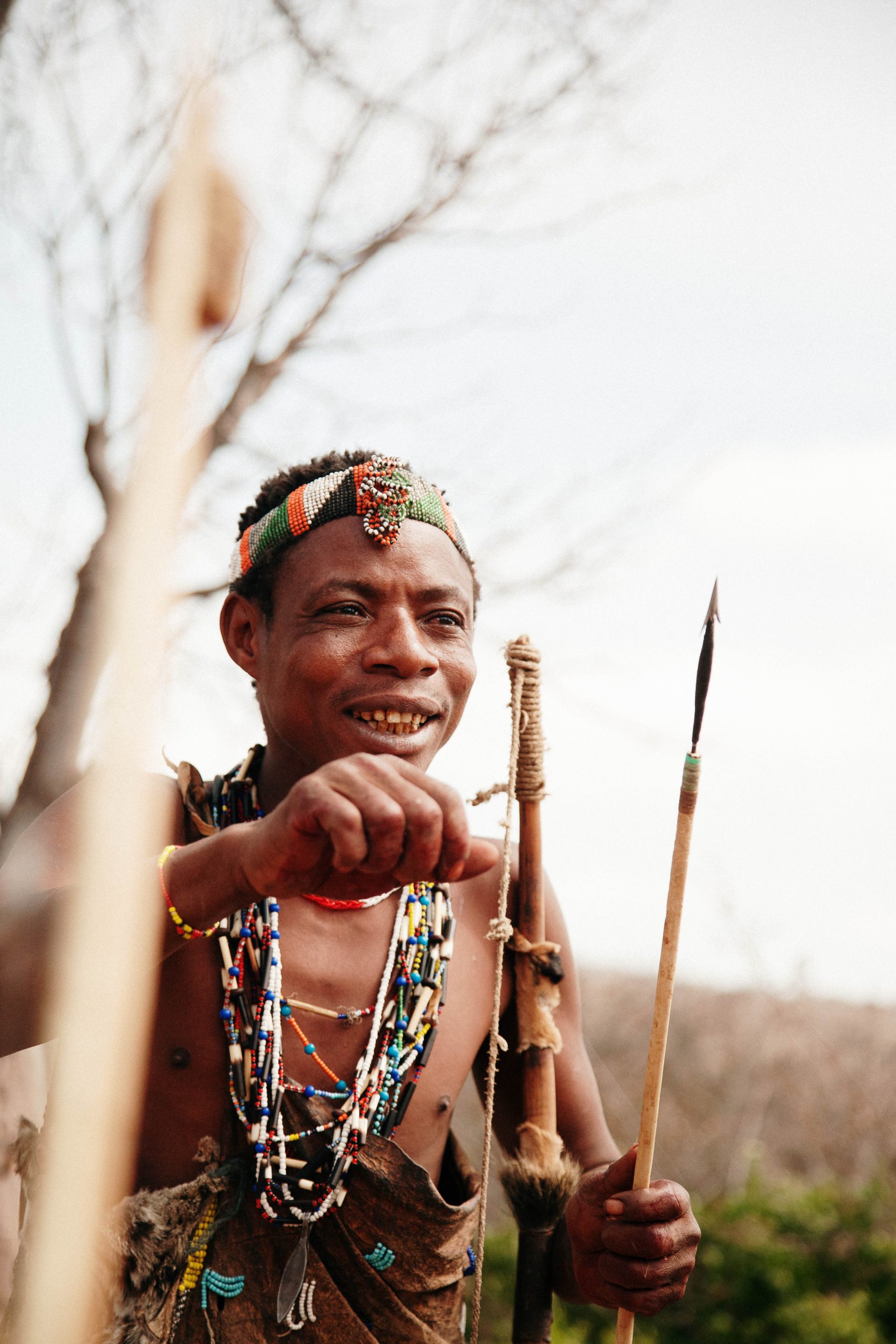
Egalitarian Society
One of the most remarkable aspects of Hadzabe life is its egalitarianism. Unlike hierarchical pastoralist or farming tribes, the Hadzabe have no chiefs or centralised leadership structure. Decisions are often made collectively, and both men and women have a voice in community matters, which differs from Tribes such as the Maasai.
Property ownership within the tribe is not common. Aside from weapons, tools, and ornaments, little is individually “owned.” The sharing of food is central to their culture, ensuring that no individual tribe member goes hungry; this kind of collectivism is essential to the survival of hunter-gatherer societies, and has gone on to influence modern Tanzanian politics. It also reflects the ideals of modern Tanzanian political movements in the 1960’s, until today.

Spiritual Beliefs
The Hadzabe belief system is tied to nature and ancestral spirits. They hold ceremonies around fire, sing and dance, and tell stories that link them to their environment. As a visitor, many of these rituals are performed when visiting.

While some Hadzabe have come into contact with Christianity and Islam, many continue to follow traditional spiritual practices that honour the natural world around them.
The challenges the Hadzabe face today
The Hadzabe face serious threats to their survival as a culture. Encroaching agriculture, land privatisation, and conservation policies have reduced their hunting grounds. Climate change further disrupts their fragile ecosystem. Tourism offers both opportunity and risk: while visits to Hadzabe camps generate income and global awareness, they can also lead to cultural erosion when traditions are performed for entertainment.
Still, the Hadzabe remain remarkably resilient. Efforts by NGOs and community leaders aim to secure land rights and preserve their way of life. For now, they remain one of the last living links to humanity’s hunter-gatherer past.
———-
The Datoga: Pastoral Blacksmiths
Origins and History
The Datoga, sometimes called Mang’ati by neighbouring tribes, are a Nilotic-speaking people believed to have migrated southward into Tanzania centuries ago. Today, they number around 80,000 to 90,000 and are spread across northern and central Tanzania, often living near Maasai and Hadzabe communities.
Historically, the Datoga were semi-nomadic pastoralists, valuing cattle, goats, and sheep as both wealth and sustenance. However, what sets them apart from other pastoral tribes is their expertise in blacksmithing. For generations, Datoga men have forged tools, knives, and spearheads, often supplying neighbouring communities.
Social and Cultural Structure
Datoga society is organised around extended families and clans. Unlike the egalitarian Hadzabe, the Datoga have a more defined social hierarchy; elders hold authority, and families compete for status based on livestock and wealth.
Cattle still remain central to their economy and culture, as they provide milk, meat, and status, while also serving as dowries in marriage. Cattle are not just possessions but symbols of identity, lineage, and continuity.
Role of Men and Women
Datoga women build homes, care for children, and tend to the livestock. They are responsible for household tasks like cooking and fetching water. Women wear distinctive jewellery and often bear traditional facial tattoos, which are circular patterns around the eyes to symbolise beauty and identity.

Marriage plays a central role in women’s lives. Bridewealth, usually paid in cattle, seals the union, but polygamy is not uncommon.
Datoga men oversee herding and blacksmithing. They have become skilled smiths who melt down scrap metal and reforge it into tools, ornaments, and weapons. These items are often traded with the neighbouring tribes.
Men also defend herds from raiders and predators. Historically, they were fierce warriors – the word “Mang’ati” means “enemy” in Maasai – reflecting centuries of tension between Datoga and other tribes who live in this area of Tanzania.
Beliefs and Spirituality

The Datoga maintain a spiritual worldview centred on ancestral worship and natural forces. Rituals often involve animal sacrifices, prayers for rain, and blessings for livestock fertility; these beliefs are very common among indigenous tribes in Tanzania. While both Christianity and Islam have been introduced to the Datoga, their traditional beliefs remain strong, particularly in rural areas.
Challenges
Like all indigenous tribes, the Hadzabe, the Datoga face pressures from land loss, climate change, and modernisation. Cattle herding is increasingly difficult due to shrinking grazing land and competition with wildlife reserves. Blacksmithing, once a vital trade, is challenged by cheap manufactured goods.
Education levels are low, particularly for women, which limits their opportunities within Tanzanian society. Like the Maasai and Hadzabe, the Datoga continue to resist assimilation and hold tightly onto the traditions which define their identity.
Hadzabe and Datoga together
Although culturally distinct, the Hadzabe and Datoga share a unique relationship. The Hadzabe often rely on the Datoga for tools, particularly arrowheads made by blacksmiths. In return, they may share meat or honey. This symbiotic relationship reflects the diversity of survival strategies in northern Tanzania – hunter-gatherers and pastoralist-blacksmiths coexisting and supporting one another.

 English